


-
INDUSTRIES
-

Precast Concrete Plant
-
Steel Industry
-
Paper Industry
-
Waste to Energy and Biomass Industry
-
Power Industry
-

Overhead Cranes for Automotive Production: Smart Solutions for Enhanced Efficiency
-
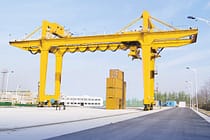
Port Machines Industry
-

Manufacturing Industry
-
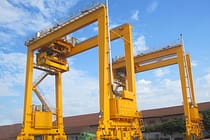
Different Types of Container Cranes, Shipyard Cranes, Cargo Cranes Used in Port, Harbor and Quay
-
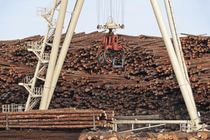
Overhead Cranes for Timber Lifting: Efficient and Safe Wood Handling
-

Overhead Cranes for the Aviation Industry: Streamlining Aircraft Assembly, Maintenance, and Repair
-

Overhead Cranes for Food and Beverages: Ideal for improving productivity and food safety
-
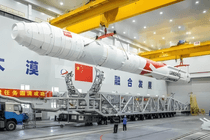
Overhead Cranes for Aerospace Industry: Key Role in Efficient Rocket Manufacturing and Launch
-
-
EQUIPMENT
-
Overhead Cranes
-
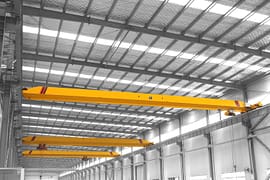
Single Girder Overhead Crane
-
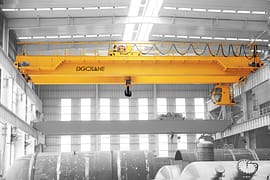
Double Girder Overhead Crane
-
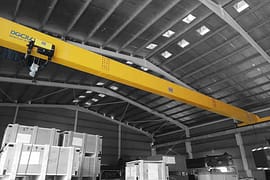
FEM Standard Overhead Cranes
-
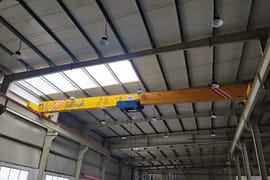
Low Headroom Overhead Cranes
-
Grab Bucket Overhead Crane
-
Electromagnetic Overhead Cranes with Lifting Magnet
-
Electromagnetic Overhead Cranes with Magnet Beam
-
Manual Overhead Cranes
-
Double Trolley Overhead Cranes
-
LDP Single Girder Overhead Cranes
-
- Eot Cranes
- Gantry Cranes
- Jib Cranes
-
Hoist & Winch Trolley
-
Electric Wire Rope Hoists
-
FEM Standard Wire Rope Electric Hoists
-
FEM Standard Electric Chain Hoists
-
Crane Trolley
-
Chain Hoists
-
Electric Winch
-
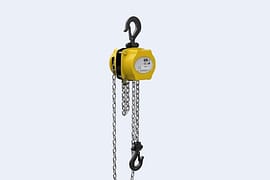
Manual Chain Hoists
-
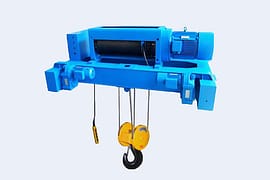
Double Girder Trolley Electric Hoists
-
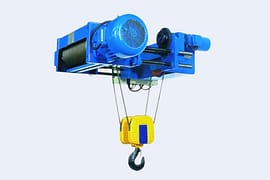
Low Headroom Wire Rope Electric Hoist
-
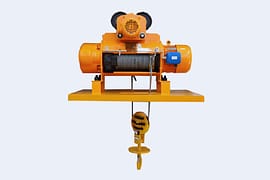
Electric Hoist for Molten Metal
-
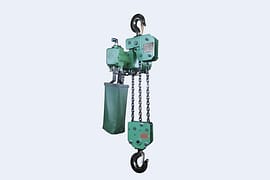
Pneumatic (Air) Chain Hoists
-
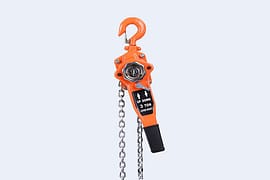
Lever Hoists
-
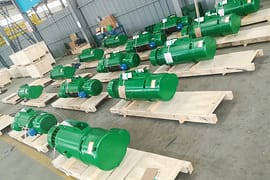
Electric Hoists
-
- Workstation Cranes
- Portable Gantry Cranes
- Explosion Proof Cranes & Hoists
- Special Cranes
- Port Cranes
- Electric Transfer Carts
-
Overhead Cranes
-
CRANE PARTS
- Crane Wheel Assembly
- Crane Grab Buckets
- Crane Tongs
- Crane Spreader
- Crane Drives
-
Crane Electrical Equipment
-
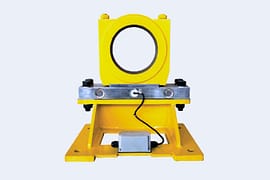
Overload Limiter
-
Crane Cabin
-
Crane Power Supply System
-

Explosion Proof Crane Radio Remote Controls
-

Joystick Type Crane Radio Remote Controls
-

Pushbutton Type Crane Wireless Remote Controls
-
Single-pole Insulated Conductor Rails
-
Enclosed Conductor Rails
-
Seamless Conductor Rails
-
Copperhead Conductor Rails
-
Overhead Crane Cables
-
- Other Cranes Parts
- ABOUT US
- CONTACT US
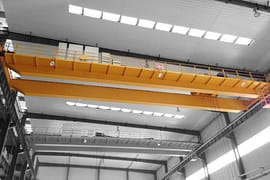
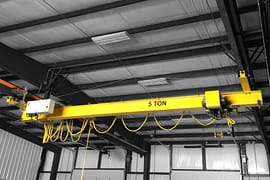
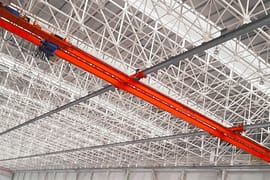
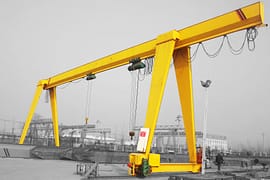
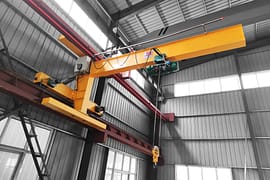
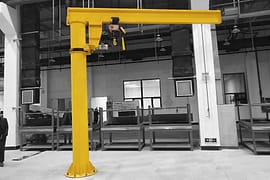
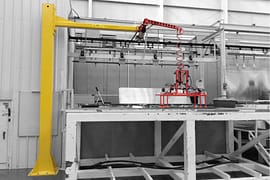
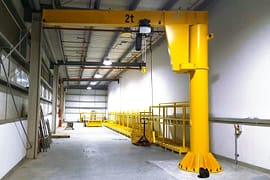
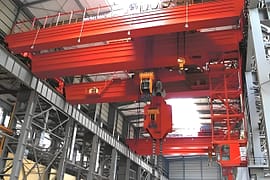
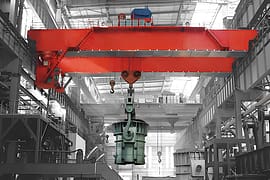
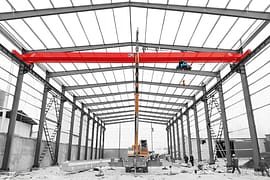
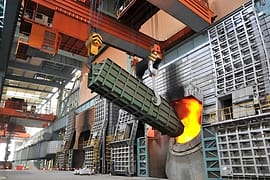




5 Ton HD Single Girder Overhead Crane for a New Factory in Tanzania
Table of Contents
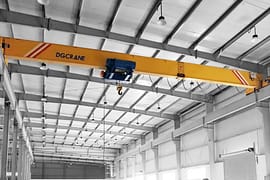
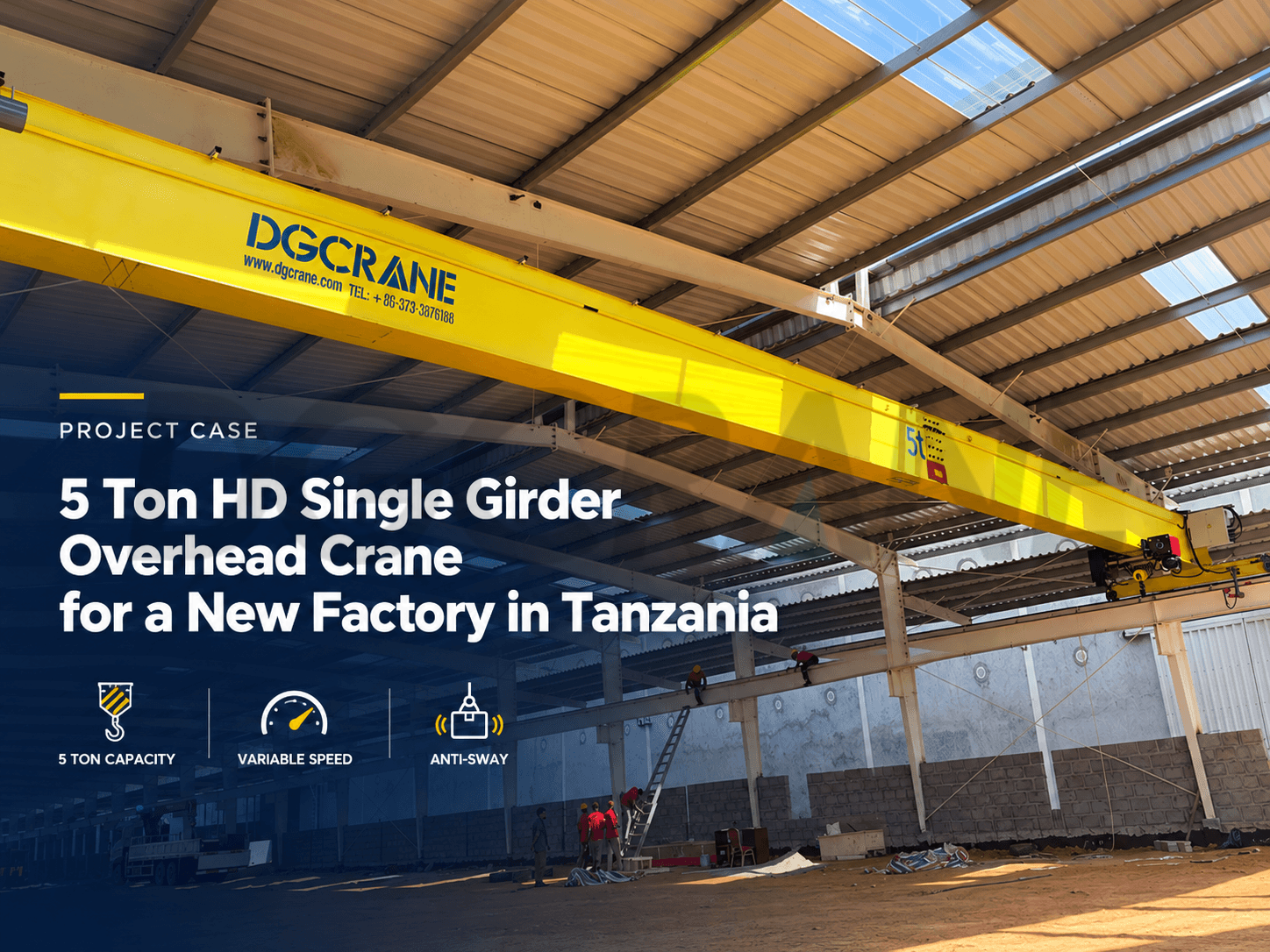
A Tanzanian client needed an overhead crane for a new factory that would match the building dimensions, provide stable handling, and withstand dusty construction-site conditions. Based on the factory drawings, we supplied a 5-ton HD single girder overhead crane with matching rails and a power supply system, plus Sa 2.5 shot blasting and an alkyd finish coat for surface protection. Our engineer then guided the local team through installation and commissioning, completing the on-site work in five days.
Project Background
This project is located in Tanzania. At the time the crane solution was finalized, the facility was still under construction, with the crane runways, roof, and certain auxiliary infrastructure yet to be completed. Furthermore, the client intended for a local team to carry out the on-site installation. However, as this team lacked prior experience in the installation and commissioning of single girder overhead cranes, they required not only the supply of the lifting equipment but also ongoing technical support from the vendor—spanning everything from initial design through to final installation and commissioning.
Client Requirements
Taking into account the construction progress of the facility and future production requirements, the client specified that the crane must not only meet material-handling needs but also align with the facility’s span, rail positioning, and ceiling height. Furthermore, the client set clear requirements regarding the crane’s operational stability and overall build quality. Their core needs are focused on the following three aspects:
Matching Crane Parameters to the Building
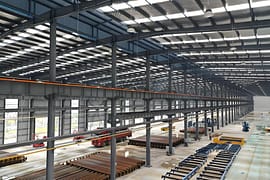
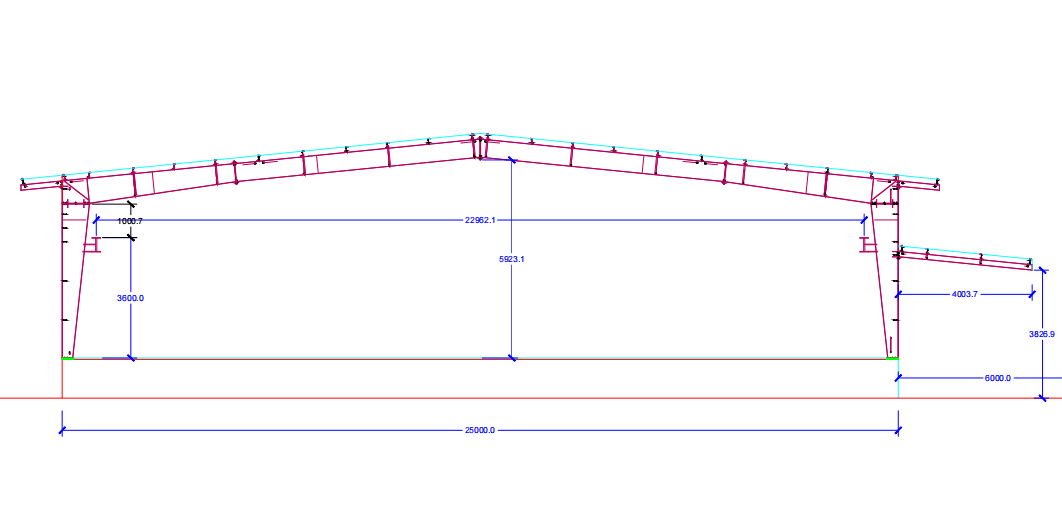
The structural drawings showed a key internal width of approximately 22.962 m, a roof ridge height of about 5.923 m, and a sidewall height of around 3.60 m. However, the crane parameters could not be determined solely from the overall building width or the clear distance between columns. Factors such as the runway centerlines, end-carriage clearance, the lowest point of the roof structure, and the effective hook working range also had to be considered. Since the final crane span and lifting height would directly affect the runway configuration and subsequent installation, these dimensions had to be carefully verified before production.
Main Girder Coating Protection in Dusty Conditions
Although the single girder overhead crane would ultimately operate indoors, the customer explained that the factory was still under construction, with some walls and ventilation areas not yet fully enclosed, resulting in a dusty environment where equipment storage, lifting operations, and multiple construction activities were taking place simultaneously. Under these conditions, the coating on the crane's steel structure could be affected by dust, lifting friction, or accidental impacts, while any local coating damage could increase the risk of corrosion during subsequent use. The customer therefore had specific requirements for both the protective performance and the appearance of the coating.
Engineering Support for the Local Installation Team
The customer had already organized a local installation team to carry out the on-site work, but assembling the main girder and end carriages, adjusting the hoisting mechanism, completing the electrical wiring, and commissioning the entire crane all required a clearly defined sequence and careful inspection at each stage. The customer therefore asked us to send an engineer experienced in single girder overhead cranes to the project site to work alongside the local team, provide technical guidance, inspect critical installation work, and oversee the final commissioning. This arrangement allowed the customer to make effective use of its existing workforce while helping ensure that the installation and commissioning were completed correctly.
The Solution We Offered
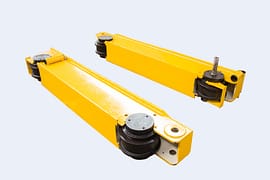
Based on the customer’s lifting requirements, we selected and configured a 5-ton HD single girder overhead crane. Since the crane runway extends 210 m along the workshop, we also supplied 50 × 50 mm square steel rails with a combined length of 420 m for both sides, together with a 210 m enclosed conductor rail system. The single girder overhead crane drawing and detailed technical parameters are provided below.
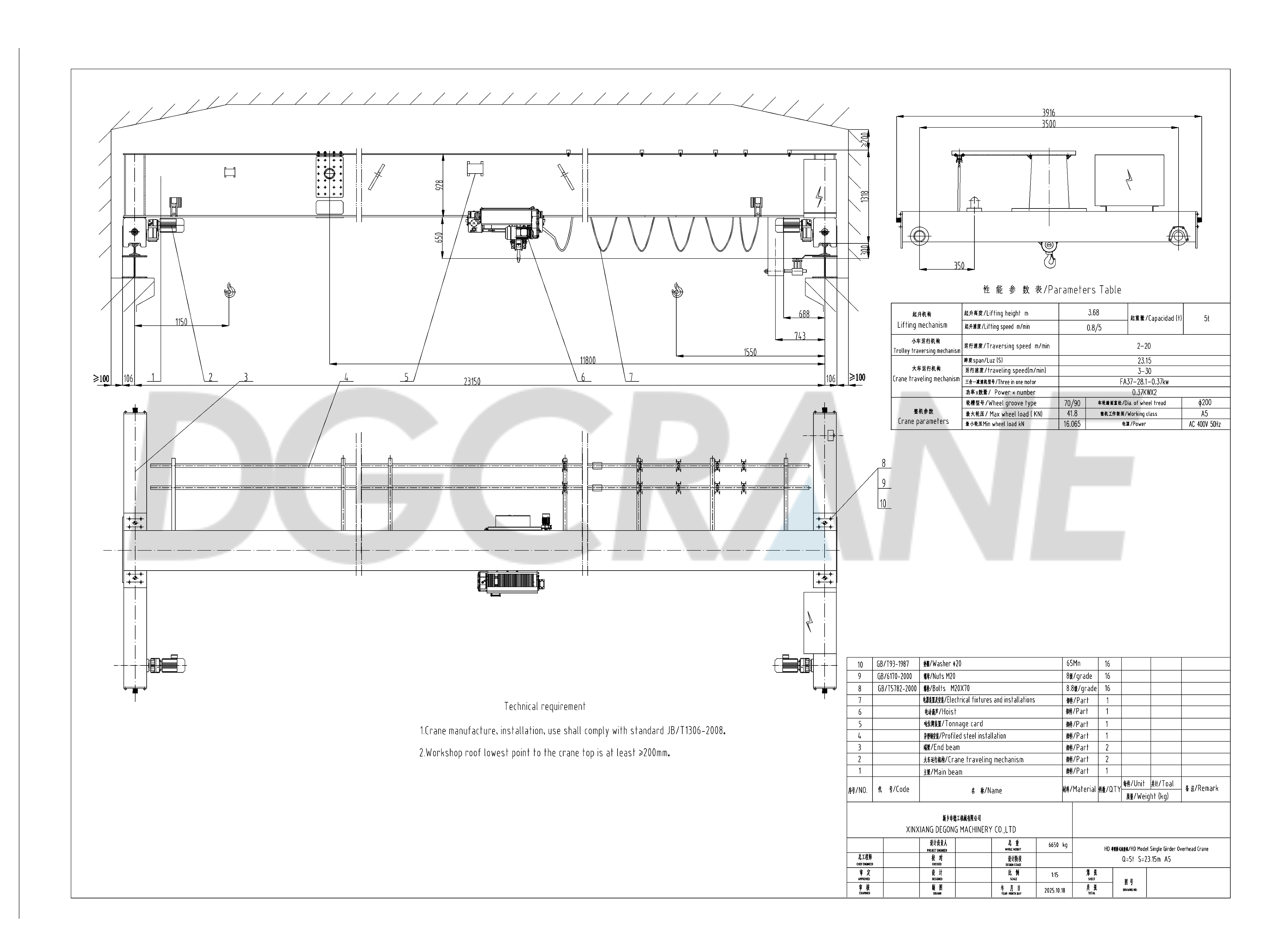
- Capacity: 5 ton
- Span: 23.15 m
- Lifting height: 3.68 m
- Lifting mechanism: NR 3T electric wire rope hoist
- Lifting speed: 5/0.8 m/min
- Hoist travelling speed: 2-20 m/min
- Crane travelling speed: 3-30 m/min
- Control method: controller + remote control
- Work duty: A5
- Protection grade: IP54
- Voltage: 400v/50Hz/3ph
Key Features of HD Single Girder Overhead Crane
- Dual-Speed Hoisting for Efficient Handling and Precise Positioning: The hoist uses a dual-speed design, with the higher speed supporting efficient routine lifting and the lower speed allowing fine adjustments as the load approaches its intended position. Compared with a single-speed hoist, this configuration is better suited to operations that require both efficient material handling and controlled load placement.
- Variable-Frequency Crane and Trolley Travel for Smooth Operation: Both the bridge and trolley travel mechanisms are controlled by variable-frequency drives, allowing the operator to adjust the travel speed for different stages of the lifting operation. This provides smoother starting, acceleration, deceleration, and stopping while reducing mechanical shock to the motors, gearboxes, wheels, and runway rails.
- Fixed-Rope Anti-Sway System to Reduce Load Stabilization Time: The HD single girder overhead crane is also equipped with a fixed-rope anti-sway system that further limits load swing in the bridge travel direction. This reduces the time spent waiting for the suspended load to stabilize naturally and makes it easier for operators to control sway without relying heavily on reverse jogging.
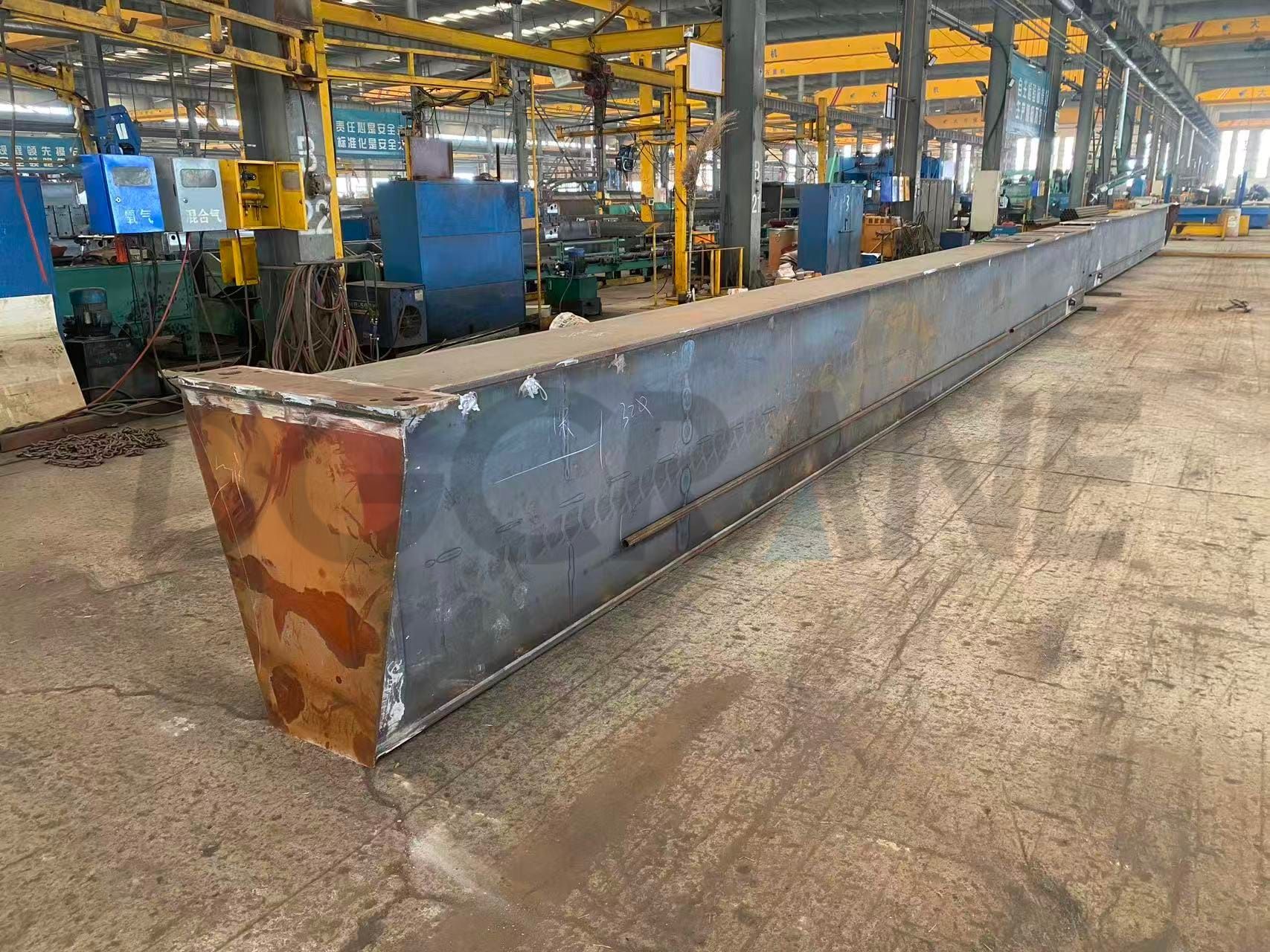
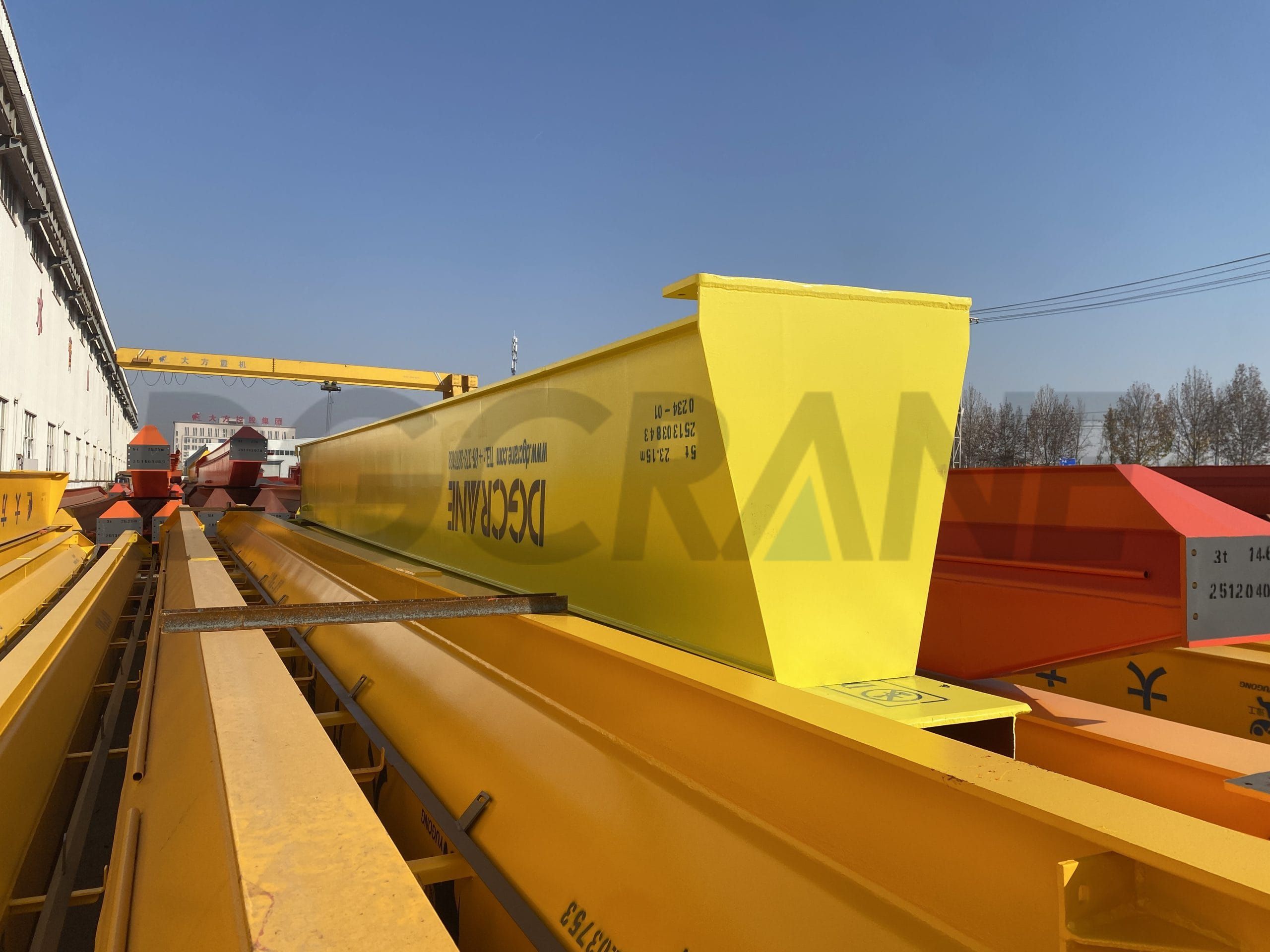
Sa 2.5 Shot Blasting and Alkyd Paint for Main Girder
Before painting, the main girder steel plates were fully shot-blasted to achieve an Sa 2.5 surface preparation grade, which represents very thorough blast cleaning. The treated steel surface was free from visible mill scale, rust, and other contaminants, with a uniform metallic appearance and a surface roughness of Rz 40–80 μm. The fine surface profile created by shot blasting improves coating adhesion and provides a reliable foundation for the subsequent alkyd finish coat. The alkyd coating forms a smooth, uniform protective layer that helps isolate the steel from moisture and dust under normal indoor operating conditions, while also making future touch-up and maintenance more convenient.
The combination of Sa 2.5 surface preparation and an alkyd finish coat provides practical protection for the crane steel structure. Since the main girder and end carriages were assembled and lifted at the customer's partially enclosed construction site, this coating system helped reduce the risk of early corrosion and surface damage while minimizing subsequent touch-up painting and maintenance.
On-Site Installation and Commissioning Support
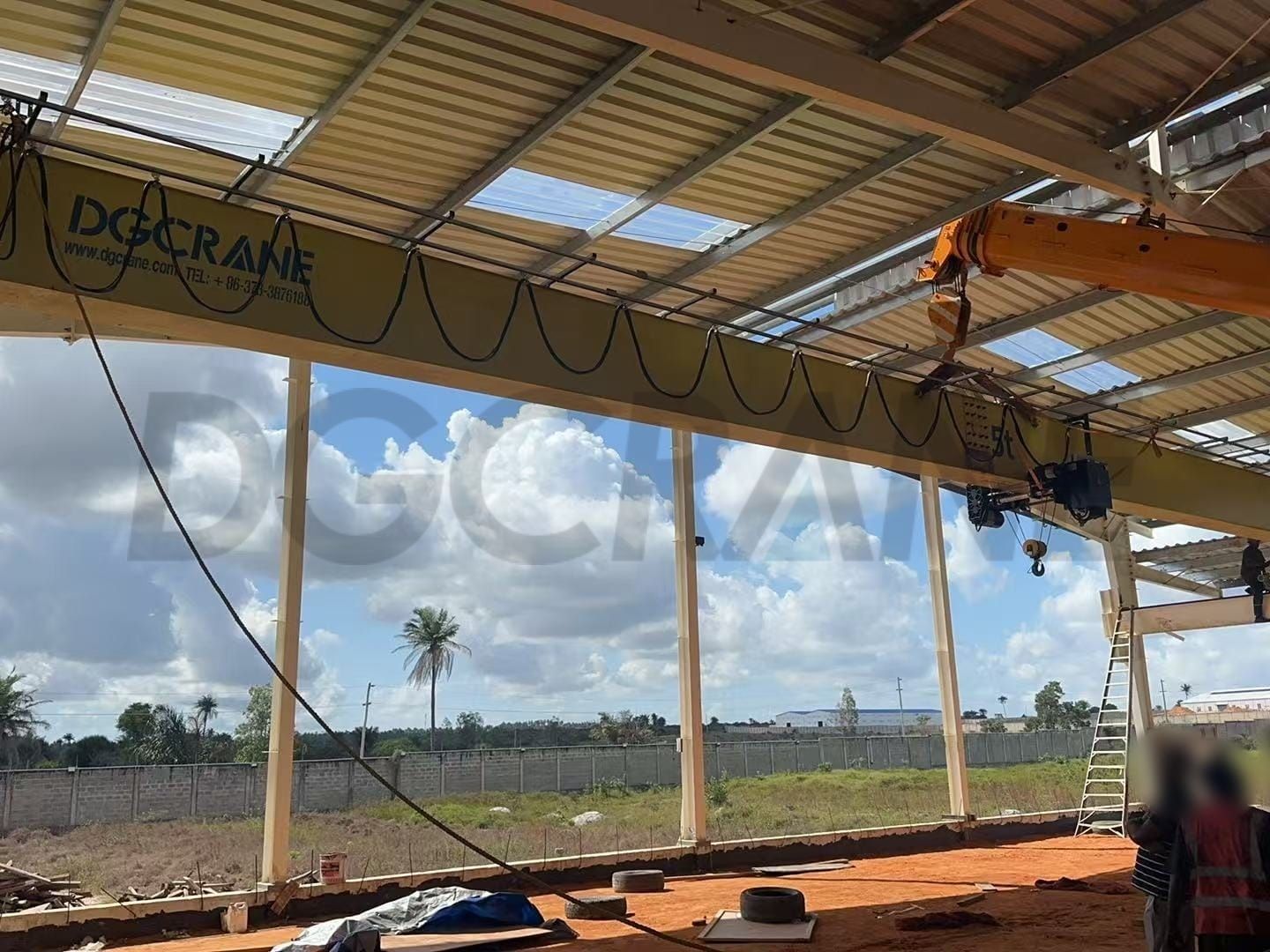
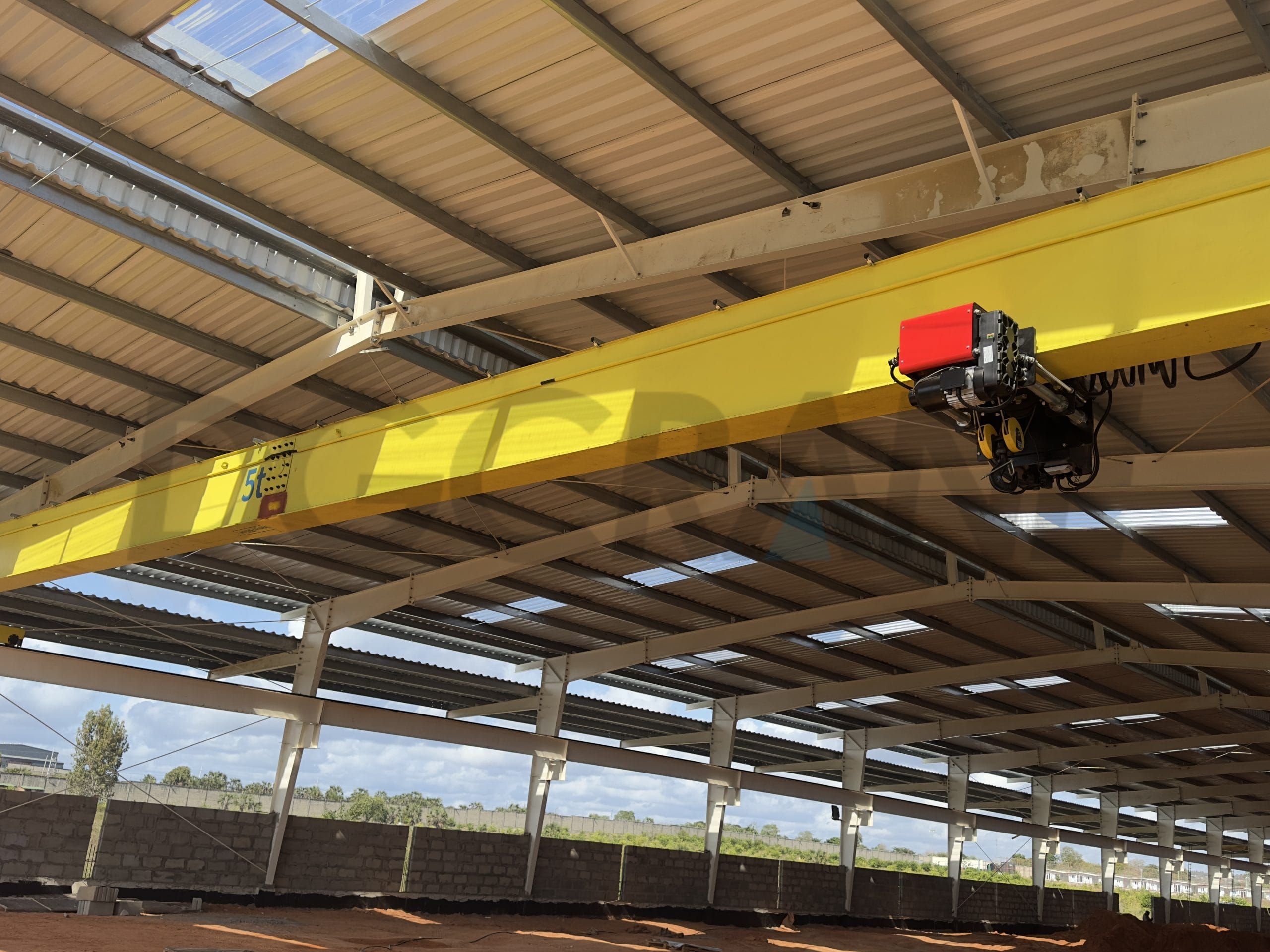
After the equipment arrived at the site, our engineer first inspected the actual installation conditions and found that the factory's main steel structure and roof were largely complete, while the sidewalls, floor, and surrounding areas were still under construction. Based on the site conditions, the engineer advised the customer to arrange suitable auxiliary lifting equipment and begin crane installation without waiting for the entire factory to be completed, helping shorten the time before the equipment could enter operation.
The engineer then provided step-by-step guidance on assembling and connecting the crane structure, installing the main girder and end carriages, installing and adjusting the hoisting mechanism, routing and connecting the electrical wiring, and installing the power supply system, while the local team carried out the physical work. After installation, both teams inspected the critical dimensions and connection points and completed functional checks and load testing. This close cooperation improved installation efficiency and gave the customer's team a better understanding of the single girder overhead crane structure and its future maintenance requirements.
The 5-ton HD single girder overhead crane was manufactured, painted, and packed within 30 days. After the equipment arrived at the project site, our engineer provided installation guidance and inspected the critical stages, while the local team carried out the on-site work. Working together, the two teams completed the installation of the main girder and end carriages, electrical wiring, and functional commissioning in just five days, bringing the project to a successful handover.
Get A Customized Solution
Whether you already have complete factory drawings or your project is still in the planning stage, you can contact the DGCRANE engineering team for assistance. You do not need to have every technical parameter ready when inquiring. Based on the information currently available, we will help you identify the details that still need to be confirmed and guide you through the next steps.
- Complete factory drawings available: We can help verify the crane span, runway position, available headroom, travel length, control method, and other key information before developing an integrated solution for the crane, runway rails, and power supply system.
- Complete drawings not yet available: We can provide a site measurement checklist and guide your personnel through the measurement process using videos, photographs, or online communication. When required, we can also arrange for an engineer to visit the site, collect the necessary dimensions, and prepare a site measurement or data confirmation report for the subsequent crane design.
- Installation guidance required: Depending on the personnel and equipment available at your site, we can provide remote installation guidance or send an engineer to work with your local team on crane erection, electrical wiring, and commissioning.
- Supporting technical documents required: We can provide general arrangement drawings, component drawings, electrical diagrams, wiring documents, packing information, and operation and maintenance manuals, ensuring that the necessary information is available throughout production, installation, and subsequent operation.
Send us your factory layout or lifting requirements, and the DGCRANE engineering team will provide a one-to-one customized proposal and quotation within 24 hours.

Zora Zhao
Expert in Overhead Crane/Gantry Crane/Jib Crane/Crane Parts Solutions
With 10+ years of experience in the Crane Overseas Export Industry, helped 10,000+ customers with their pre-sales questions and concerns, if you have any related needs, please feel free to contact me!
WhatsApp: +86 189 3735 0200
Email: zorazhao@dgcrane.com
Contact Details
DGCRANE is committed to providing the professional Overhead crane products and relavent service. Exported to Over 100 Countries, 5000+ Customers Choose Us, Worth to be Trusted.
Get In Touch
Fill out your details and someone from our sales team will get back to you within 24 hours!
Subscribe to our newsletter
The latest DGCRANE price list, news, articles, and resources.
- Overhead Cranes
- Single Girder Overhead Cranes
- Double Girder Overhead Crane
- Low Headroom Overhead Cranes
- Underslung Cranes
- FEM Standard Overhead Cranes
- Grab Bucket Overhead Crane
- Manual Overhead Cranes
- LDP Single Girder Overhead Cranes with Side-Mounted Hoists: Optimal Solution for Low-Ceiling Workshops