


-
INDUSTRIES
-

Precast Concrete Plant
-
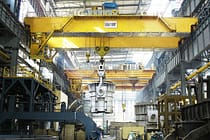
Steel Industry
-
Paper Industry
-
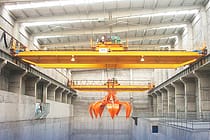
Waste to Energy and Biomass Industry
-
Power Industry
-

Overhead Cranes for Automotive Production: Smart Solutions for Enhanced Efficiency
-
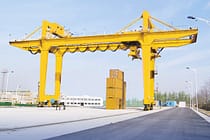
Port Machines Industry
-

Manufacturing Industry
-
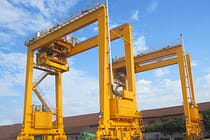
Different Types of Container Cranes, Shipyard Cranes, Cargo Cranes Used in Port, Harbor and Quay
-
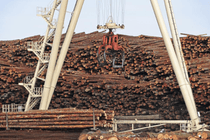
Overhead Cranes for Timber Lifting: Efficient and Safe Wood Handling
-

Overhead Cranes for the Aviation Industry: Streamlining Aircraft Assembly, Maintenance, and Repair
-

Overhead Cranes for Food and Beverages: Ideal for improving productivity and food safety
-
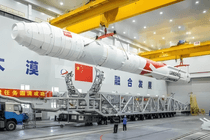
Overhead Cranes for Aerospace Industry: Key Role in Efficient Rocket Manufacturing and Launch
-
-
EQUIPMENT
-
Overhead Cranes
-
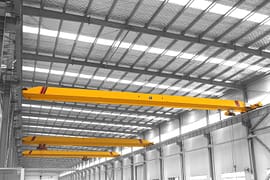
Single Girder Overhead Crane
-
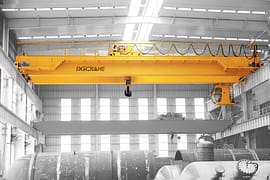
Double Girder Overhead Crane
-
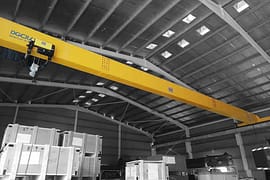
FEM Standard Overhead Cranes
-
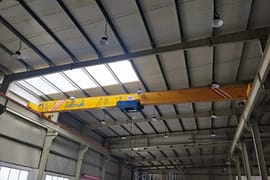
Low Headroom Overhead Cranes
-
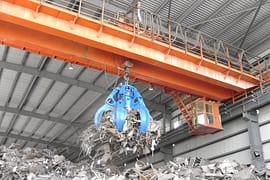
Grab Bucket Overhead Crane
-
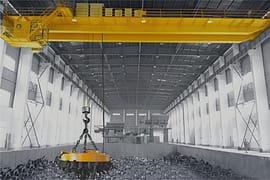
Electromagnetic Overhead Cranes with Lifting Magnet
-
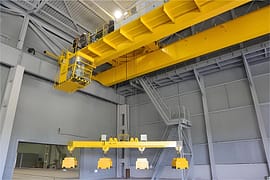
Electromagnetic Overhead Cranes with Magnet Beam
-
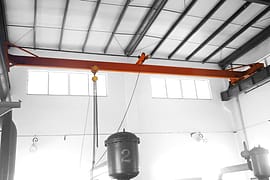
Manual Overhead Cranes
-
Double Trolley Overhead Cranes
-
LDP Single Girder Overhead Cranes
-
- Eot Cranes
- Gantry Cranes
- Jib Cranes
-
Hoist & Winch Trolley
-
Electric Wire Rope Hoists
-
FEM Standard Wire Rope Electric Hoists
-
FEM Standard Electric Chain Hoists
-
Crane Trolley
-
Chain Hoists
-
Electric Winch
-
Manual Chain Hoists
-
Double Girder Trolley Electric Hoists
-
Low Headroom Wire Rope Electric Hoist
-
Electric Hoist for Molten Metal
-
Pneumatic (Air) Chain Hoists
-
Lever Hoists
-
Electric Hoists
-
- Workstation Cranes
- Portable Gantry Cranes
- Explosion Proof Cranes & Hoists
- Special Cranes
- Port Cranes
- Electric Transfer Carts
-
Overhead Cranes
-
CRANE PARTS
- Crane Wheel Assembly
- Crane Grab Buckets
- Crane Tongs
- Crane Spreader
- Crane Drives
-
Crane Electrical Equipment
-
Overload Limiter
-
Crane Cabin
-
Crane Power Supply System
-

Explosion Proof Crane Radio Remote Controls
-

Joystick Type Crane Radio Remote Controls
-

Pushbutton Type Crane Wireless Remote Controls
-
Single-pole Insulated Conductor Rails
-
Enclosed Conductor Rails
-
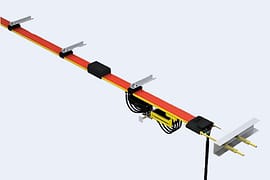
Seamless Conductor Rails
-
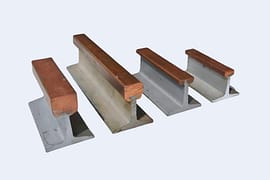
Copperhead Conductor Rails
-
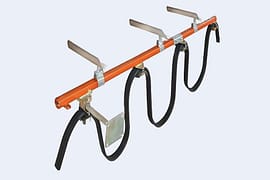
Overhead Crane Cables
-
- Other Cranes Parts
- ABOUT US
- CONTACT US
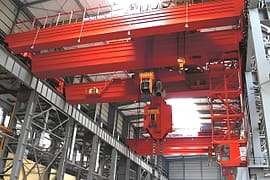
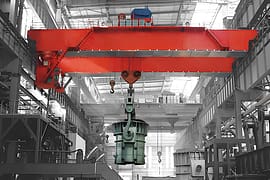
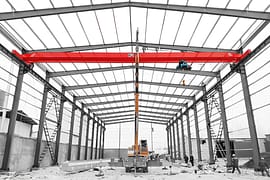
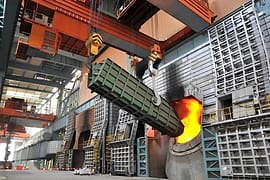


Casting Crane Fatigue Prevention: Main Structural Components
Table of Contents
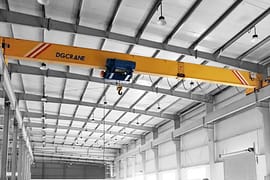
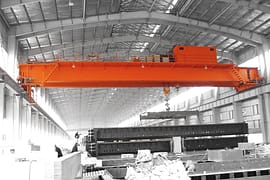
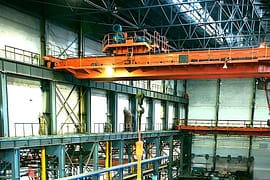
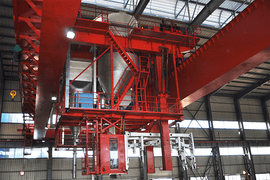
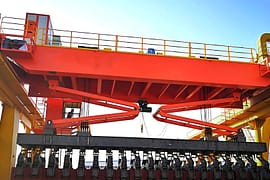
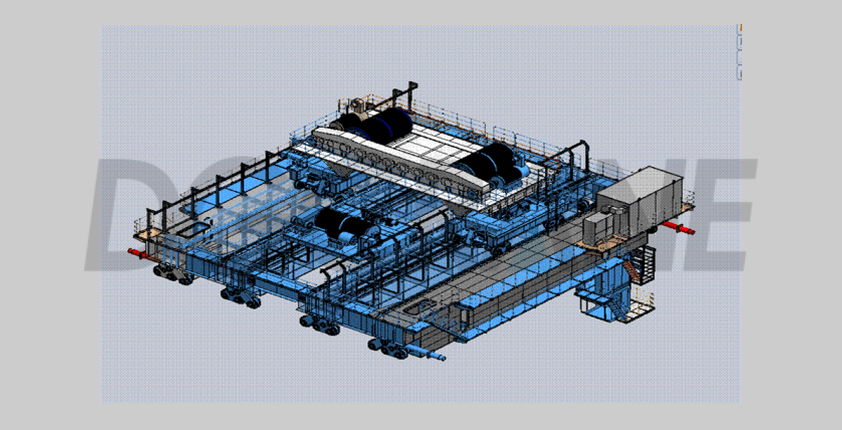
Casting crane fatigue prevention is essential on metallurgical production lines for smelting, rolling, forging, furnace charging, and other hot-working processes. With the continuous introduction of modern smelting technologies and equipment, higher requirements have been placed on the lifting and running speeds and working levels of casting cranes. As the crane’s overall duty class increases, preventing fatigue failure in the main structural components becomes critical to safe and reliable operation.
Casting crane failures caused by design or manufacturing defects can reduce production efficiency and output, shut down an entire production line, or, in severe cases, damage ground equipment and cause serious injuries or fatalities.
Causes of Fatigue Failure in Main Structural Components
Repeated alternating stress can initiate a crack at a stress concentration after a certain number of cycles. Under suitable conditions, the crack propagates and eventually causes sudden fracture. This process is called fatigue failure, and the number of stress cycles before failure is the fatigue life.
All structural components in mechanical equipment can suffer fatigue failure. Statistics indicate that metal fatigue causes more than 80% of fracture accidents in mechanical products. The main structural components of a metallurgical casting crane carry variable cyclic or random loads, making fatigue their primary failure mode.
Prevention and Control of Fatigue Failure in Main Structural Components
Rational Design of Main Structural Components
a. Select suitable cross-sections for the main structural components according to the crane duty class specified in the contract to meet strength and stiffness requirements. Cranes rated A6 or above require a fatigue-strength check.
b. Load paths in load-bearing components should be simple, clear, and continuous.
c. Avoid abrupt cross-section changes in highly stressed areas, as they can lead to fatigue failure.
d. Design mechanisms and structural components to avoid statically indeterminate structures where practical, giving priority to statically determinate designs.
e. Pay particular attention to thick-to-thin plate joints, main-girder end sections, access-opening layouts, and the fillet radius (R) of bent plates.
Appropriate Weld Selection and Welding Quality
a. Weld types must comply with applicable standards. Design should carefully address plate butt joints, including thick-to-thin joints, thick-plate groove forms, circumferential and longitudinal drum joints, and weld symbols at connections.
b. Fatigue performance is closely related to weld type and quality. Welds must meet the relevant standards because many structural fatigue failures originate at welded joints.
c. Welding electrodes, wire, and flux must be compatible with the materials being joined.
Appropriate Material Selection for Main Structural Components
a. Base materials for the main structural components must comply with applicable standards and have valid material certificates.
b. For an off-rail box girder, the upper section of the main web should use T-section steel. Its compressive capacity must meet the local compressive-stress requirements in Clause 5.4.1.2 of the design standard (according to GB/T 3811). If T-section steel is unavailable, connect the main web to the compression flange with fully penetrated, double-sided continuous K-groove welds.
c. Important load-transfer components should be cut so that their primary force direction follows the plate rolling direction.
e. Select the plate bending radius R to maintain a smooth load path and avoid abrupt changes in stress flow.
Safe Operating Conditions of Casting Crane
Safe operation of casting crane depends on design, manufacturing quality, operating practices, maintenance, and actual working conditions.
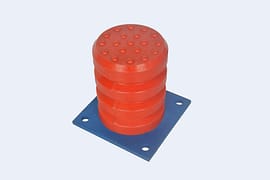
- A crane shall not continue operating if a buffer has failed. Collision of the crane bridge or trolley at its limit position following buffer failure causes an instantaneous increase in structural stress, induces stress fluctuations in the crane structure, reduces its fatigue strength, and accelerates crack initiation.
- If the crane bridge or trolley continues to travel after a limiter has failed, collision at its limit position will adversely affect the structure and safe operation.
- The crane runway must meet the requirements specified by applicable standards. According to the F.E.M standard (European design rules for lifting machinery), poor runway conditions are extremely harmful to both structural components and mechanisms, particularly because of the dynamic effects of vertical impact. The runway must therefore be maintained in good condition; for example, rail joints must comply with the relevant national standards.
- The entire crane surface must be kept clean. Dust accumulation on the crane surface can also shorten the crane's service life.
- If cracks develop in the main load-bearing structural members subjected to crane bridge or trolley travel, the crane shall be taken out of service. It may be returned to service only after the effects of the cracks have been analyzed and measures have been taken to prevent further crack propagation. Materials used for repair welding and reinforcement shall meet the welding requirements of the original structural members, and welding quality shall be ensured.
In addition, operate the casting crane in accordance with national regulations and the contract, using proper procedures and regular maintenance.
Frequent or Intensive Casting Crane Use
The duty class of casting crane is closely related to operating frequency and load conditions. Long-term, high-frequency operation under heavy loads can damage the structure and mechanisms, causing the crane to reach its design life earlier than expected.
Key Considerations for Casting Crane Designers
During contract preparation and technical discussions, users should provide the casting crane’s actual operating conditions, operating frequency, and smelting process. Designers can then recommend an appropriate duty class combination or specify it in the contract in accordance with GB/T 3811.

Zora Zhao
Expert in Overhead Crane/Gantry Crane/Jib Crane/Crane Parts Solutions
With 10+ years of experience in the Crane Overseas Export Industry, helped 10,000+ customers with their pre-sales questions and concerns, if you have any related needs, please feel free to contact me!
WhatsApp: +86 189 3735 0200
Email: zorazhao@dgcrane.com
Contact Details
DGCRANE is committed to providing the professional Overhead crane products and relavent service. Exported to Over 100 Countries, 5000+ Customers Choose Us, Worth to be Trusted.
Get In Touch
Fill out your details and someone from our sales team will get back to you within 24 hours!
Subscribe to our newsletter
The latest DGCRANE price list, news, articles, and resources.
- Overhead Cranes
- Single Girder Overhead Cranes
- Double Girder Overhead Crane
- Low Headroom Overhead Cranes
- Underslung Cranes
- FEM Standard Overhead Cranes
- Grab Bucket Overhead Crane
- Manual Overhead Cranes
- LDP Single Girder Overhead Cranes with Side-Mounted Hoists: Optimal Solution for Low-Ceiling Workshops