


-
INDUSTRIES
-

Precast Concrete Plant
-

Steel Industry
-
Paper Industry
-
Waste to Energy and Biomass Industry
-
Power Industry
-

Overhead Cranes for Automotive Production: Smart Solutions for Enhanced Efficiency
-
Port Machines Industry
-

Manufacturing Industry
-
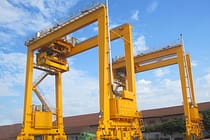
Different Types of Container Cranes, Shipyard Cranes, Cargo Cranes Used in Port, Harbor and Quay
-
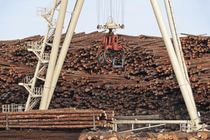
Overhead Cranes for Timber Lifting: Efficient and Safe Wood Handling
-

Overhead Cranes for the Aviation Industry: Streamlining Aircraft Assembly, Maintenance, and Repair
-

Overhead Cranes for Food and Beverages: Ideal for improving productivity and food safety
-
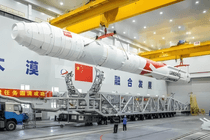
Overhead Cranes for Aerospace Industry: Key Role in Efficient Rocket Manufacturing and Launch
-
-
EQUIPMENT
-
Overhead Cranes
-
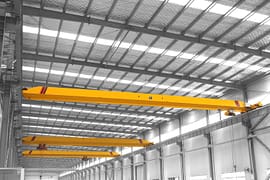
Single Girder Overhead Crane
-
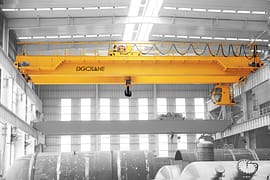
Double Girder Overhead Crane
-
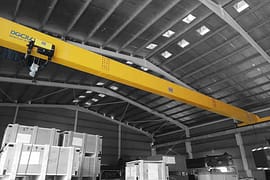
FEM Standard Overhead Cranes
-
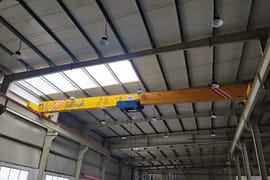
Low Headroom Overhead Cranes
-
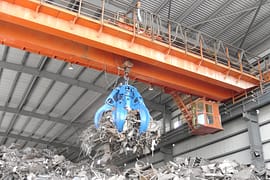
Grab Bucket Overhead Crane
-

Electromagnetic Overhead Cranes with Lifting Magnet
-
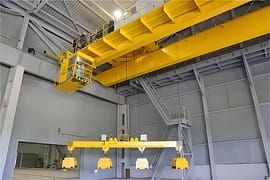
Electromagnetic Overhead Cranes with Magnet Beam
-
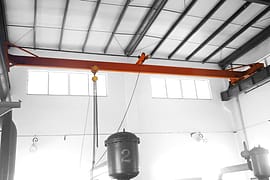
Manual Overhead Cranes
-
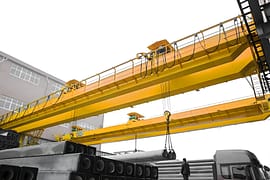
Double Trolley Overhead Cranes
-
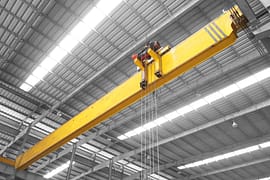
LDP Single Girder Overhead Cranes
-
- Eot Cranes
- Gantry Cranes
- Jib Cranes
-
Hoist & Winch Trolley
-
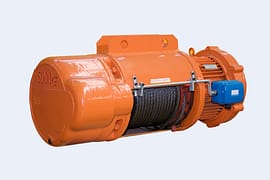
Electric Wire Rope Hoists
-
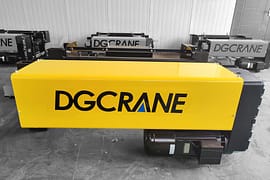
FEM Standard Wire Rope Electric Hoists
-
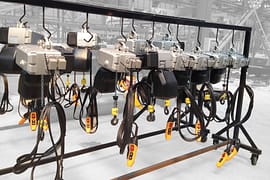
FEM Standard Electric Chain Hoists
-
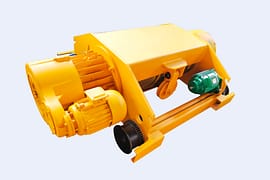
Crane Trolley
-
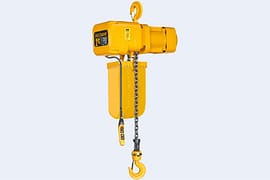
Chain Hoists
-
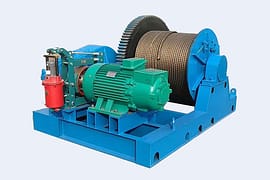
Electric Winch
-
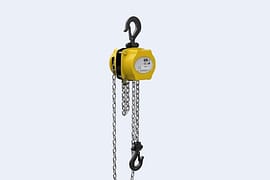
Manual Chain Hoists
-
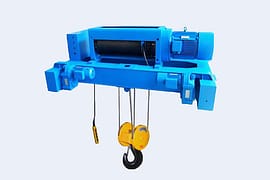
Double Girder Trolley Electric Hoists
-
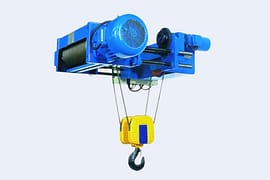
Low Headroom Wire Rope Electric Hoist
-
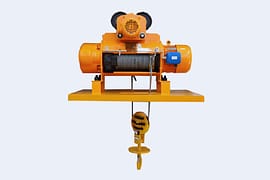
Electric Hoist for Molten Metal
-
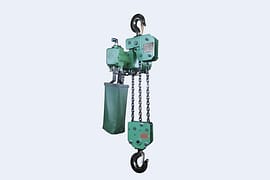
Pneumatic (Air) Chain Hoists
-
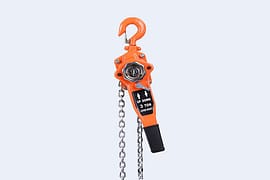
Lever Hoists
-
Electric Hoists
-
- Workstation Cranes
- Portable Gantry Cranes
- Explosion Proof Cranes & Hoists
- Special Cranes
- Port Cranes
- Electric Transfer Carts
-
Overhead Cranes
-
CRANE PARTS
- Crane Wheel Assembly
- Crane Grab Buckets
- Crane Tongs
- Crane Spreader
- Crane Drives
-
Crane Electrical Equipment
-
Overload Limiter
-
Crane Cabin
-
Crane Power Supply System
-

Explosion Proof Crane Radio Remote Controls
-

Joystick Type Crane Radio Remote Controls
-

Pushbutton Type Crane Wireless Remote Controls
-
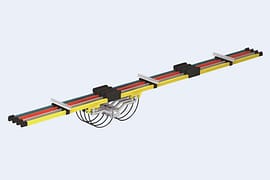
Single-pole Insulated Conductor Rails
-
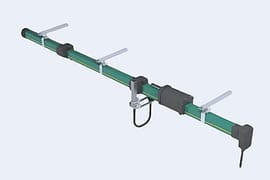
Enclosed Conductor Rails
-
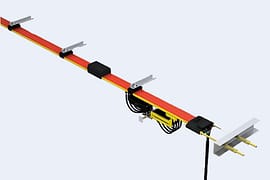
Seamless Conductor Rails
-
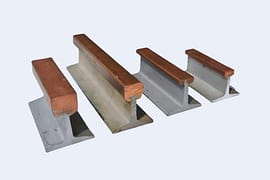
Copperhead Conductor Rails
-
Overhead Crane Cables
-
- Other Cranes Parts
- ABOUT US
- CONTACT US



Overhead Crane Wire Rope Failure Analysis and Factors Affecting Service Life
Table of Contents
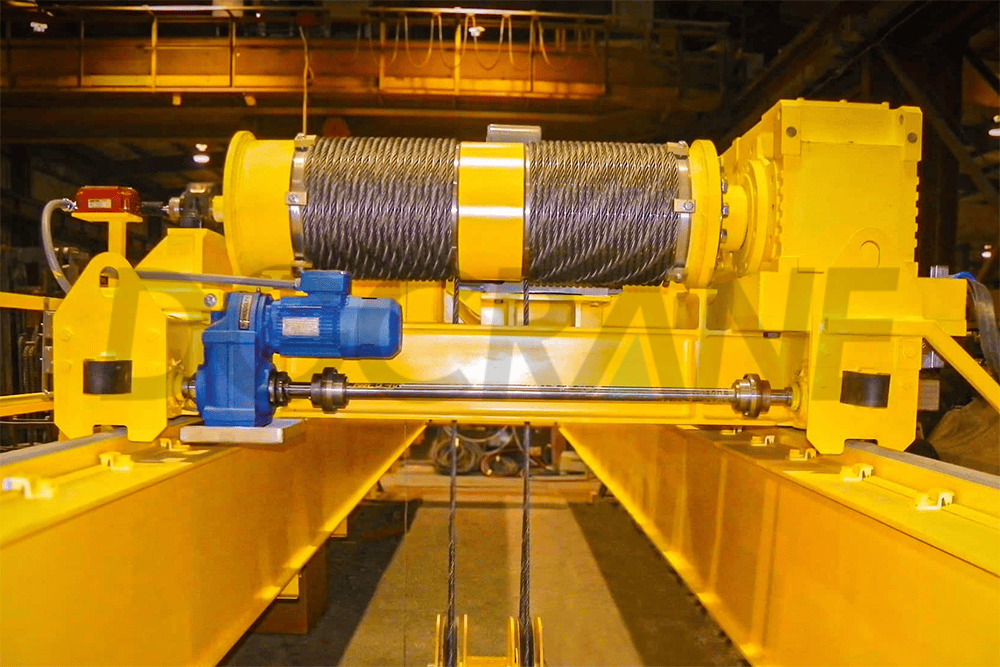
Wire rope is one of the most widely used lifting components. It offers high load-bearing capacity, good flexibility, smooth movement, and low noise. Almost all overhead crane uses wire rope to carry loads. If a wire rope suddenly breaks because of failure, the consequences can be serious. Failure analysis of wire rope is therefore important for both safety and economic reasons. This article analyzes the various factors that cause overhead crane wire rope failure in order to help extend its service life.
1. Overhead Crane Wire Rope Strength and Elongation
By design, the maximum breaking strength of a wire rope is lower than the bundled strength of all its wires. It is related to the rope construction and the performance grade of all the wires in the rope. When designing a wire rope, all load factors should be considered, including additional loads, acceleration, deceleration, rope speed, and other factors. The number, structural arrangement, and installation method of the sheaves and drum should also be considered, together with conditions that cause corrosion and wear and the rope length.
The wires in a wire rope are usually made of high-quality carbon structural steel with a carbon content of 0.5%–0.8%. The elastic modulus of the wire rope is approximately 1.6×10⁵ N/mm². This modulus measures the extent to which the wires may elongate under load.
When a wire rope is loaded, its wires move relative to one another as they adjust their positions to reach a stable state corresponding to the applied load. This produces two types of elongation. When a wire rope carries a load for the first time, the wires rearrange slightly and produce permanent elongation, known as constructional elongation. At the same time, recoverable elongation, known as elastic elongation, also occurs. Constructional elongation depends to some extent on the magnitude of the applied load.
The smaller the diameter of the wires in a rope, the smaller the bending moment required to bend them and the greater the rope’s flexibility. Wire ropes containing more wires and fiber-core wire ropes generally have better flexibility. Fully metallic wire ropes made with fewer wires have poorer flexibility, while the former generally have greater elongation than the latter. Greater flexibility provides better resistance to failure.
2. Overhead Crane Sheaves
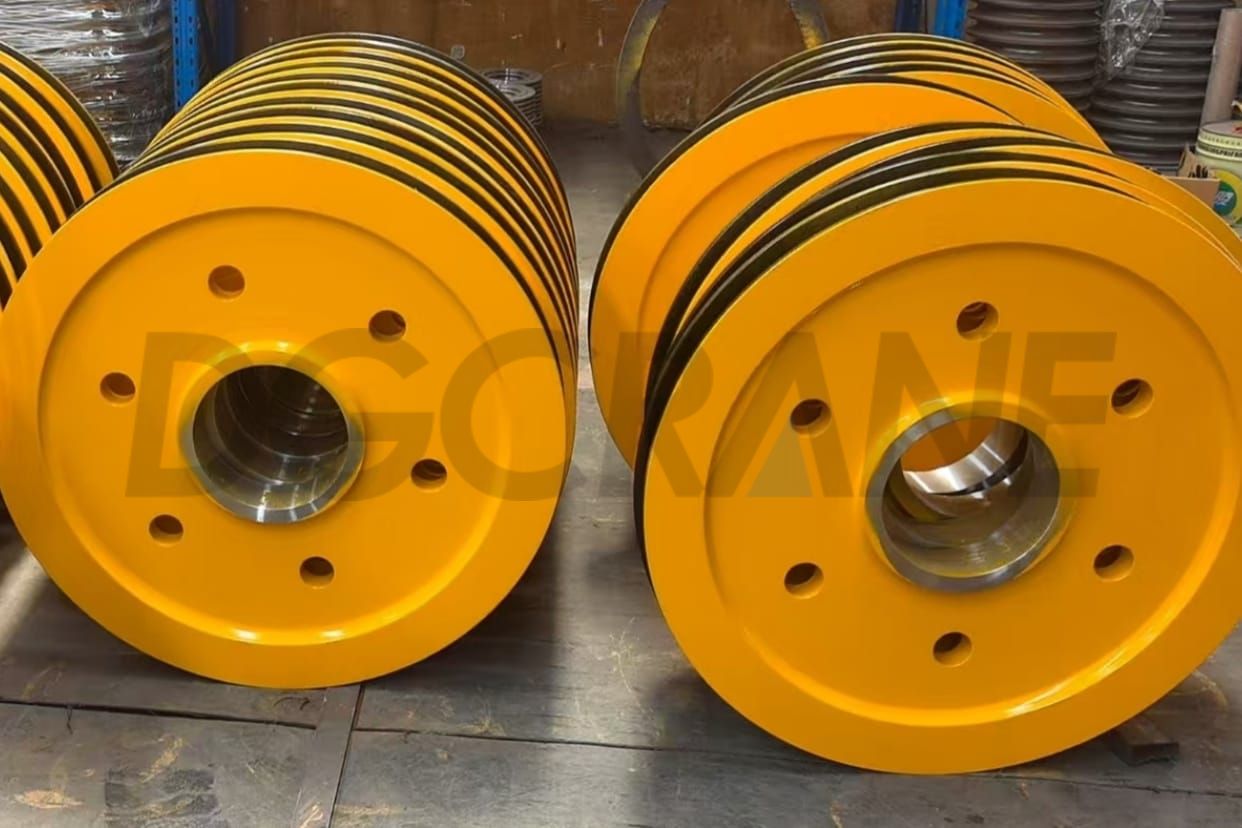
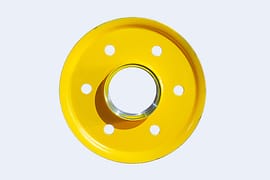
The main sheave dimension is generally expressed using the sheave diameter at the bottom of the rope groove plus the wire rope diameter as the minimum winding diameter. As the crane sheave becomes smaller, the stresses caused by bending and by contact pressure between the wire rope and the sheave increase. The higher the bending stress, the faster the wires in the rope fatigue. Increased contact stress also accelerates rope damage and sheave wear.
As the sheave becomes larger, the pressure between the rope and the sheave decreases, as does the degree of bending. If bending stress is the only factor considered, the sheave diameter for a 6×19 point-contact wire rope can be increased to 90 times the rope diameter to extend rope life. However, except for special equipment, sheaves of such a large diameter are rarely used in practice for two reasons:
- Such a large sheave is impractical for most lifting equipment.
- Bending is rarely the only factor present in any operating condition.
In practice, many other factors affect rope life in addition to bending, including repeated stress, wear, peening, impact, vibration, torsion, rotational speed, incorrect drum winding, corrosion, and insufficient maintenance. One or more of these factors may have a greater effect on rope life than the sheave size.
The optimum sheave size should be determined by considering safety, economical operation, and other factors together. However, the high pressure between the wires at the rope’s contact points, combined with the high bending stress produced when the rope runs over a small sheave, can contribute to rope damage and failure. Under these unfavorable conditions, wire breaks often occur between the contact points of adjacent strands. Breaks at these locations are often difficult or even impossible to detect through external inspection.
Therefore, for equipment with other stringent safety requirements, larger sheaves should be selected so that the rope damage process develops more gradually and damage occurs on the rope surface, where it is easier to detect and assess.
3. Overhead Crane Sheave Rope Grooves
For a wire rope to perform at its best, the sheave rope groove must have a sufficiently large diameter to maintain an appropriate clearance around the rope. The rope-groove diameter cannot remain constant. Its variation is mainly affected by the wire rope and, to a large extent, by the sheave material and the pressure applied to it.
Because the groove continuously wears, the groove is usually worn to a smaller size by the time a wire rope is approaching the end of its usable life. This creates a problem: every time a new wire rope is installed, the groove would need to be remachined or the sheave replaced. In practice, however, remachining the groove or replacing the sheave is uneconomical.
When a groove is remachined, the flange is generally repaired first, and the bottom of the groove is then cut to the appropriate diameter. If only the groove bottom is cut, the throat angle next to the bottom may become too small to provide adequate clearance, seriously increasing wire rope wear.
4. Overhead Crane Wire Rope Pressure
In addition to the bending stress produced when the rope runs over a sheave, the wire rope is subjected to radial pressure caused by contact with the sheave. This pressure produces shear stress in the rope, changes its construction, and affects the wear rate of the sheave groove. Therefore, the magnitude of radial pressure and the wear resistance of the sheave material should be considered when selecting the most appropriate wire rope construction.
5. Overhead Crane Drums

The crane drum dimensions, groove profile, and pressure are similar to the conditions discussed above for sheaves.
When a drum has a smooth surface, the actual radial pressure is relatively high because the wire rope is supported on only one side and its peripheral area is unsupported. With this type of drum, both the rope and drum wear more severely than with a grooved drum, and the rope is more easily damaged by pressure.
When bending stress is the main factor affecting wire rope service life, the drum diameter can be slightly smaller than the sheave diameter in the system. This is because, during movement in one direction, the rope bends twice over each sheave but only once on the drum. The rope bends for the first time as it approaches a sheave and changes from a straight line to the sheave’s curvature. It bends for the second time when it straightens again as it leaves the sheave.
In some cases, the rope travel is short. When part of the rope moves back and forth on the drum without passing over a sheave, the number of bending cycles is reduced and failure progresses more slowly.
When a grooved drum is used, an appropriate groove profile helps keep the wound rope in the correct position. Maintaining a suitable pitch between grooves is important so that adjacent rope wraps have sufficient, but not excessive, clearance. This helps prevent the rope being wound onto the drum from becoming crowded against or rubbing the rope already wound on the drum.
For multilayer winding, the pitch between groove centerlines should be sufficient to prevent the wire ropes from touching one another at the maximum fleet angle.
6. Other Failure Factors
- Corrosion: Corrosion is a common cause of wire rope failure. The corrosive atmosphere created by the operating environment can have a significant effect on rope life.
- Impact loading and vibration: Applying impact loads to a wire rope and subjecting it to vibration produces high-frequency, high bending stresses. The effect of vibration is particularly severe at the rope end termination and can cause fatigue failure.
- Excessive temperature: If a wire rope operates at an excessively high temperature, it may fail because its tensile strength decreases.
The failure analysis above shows that overhead crane wire rope failure is often the result of the combined accumulation of multiple factors. In an actual failure investigation, the factors should be analyzed comprehensively, their relative importance should be distinguished, and the primary failure cause should be identified to help extend wire rope service life.

Zora Zhao
Expert in Overhead Crane/Gantry Crane/Jib Crane/Crane Parts Solutions
With 10+ years of experience in the Crane Overseas Export Industry, helped 10,000+ customers with their pre-sales questions and concerns, if you have any related needs, please feel free to contact me!
WhatsApp: +86 189 3735 0200
Email: zorazhao@dgcrane.com
Contact Details
DGCRANE is committed to providing the professional Overhead crane products and relavent service. Exported to Over 100 Countries, 5000+ Customers Choose Us, Worth to be Trusted.
Get In Touch
Fill out your details and someone from our sales team will get back to you within 24 hours!
Subscribe to our newsletter
The latest DGCRANE price list, news, articles, and resources.
- Overhead Cranes
- Single Girder Overhead Cranes
- Double Girder Overhead Crane
- Low Headroom Overhead Cranes
- Underslung Cranes
- FEM Standard Overhead Cranes
- Grab Bucket Overhead Crane
- Manual Overhead Cranes
- LDP Single Girder Overhead Cranes with Side-Mounted Hoists: Optimal Solution for Low-Ceiling Workshops