
Automated Coke Pot Crane: Precision & Safety for Heavy-Lifting in Coking Industry
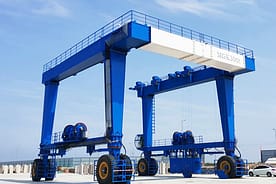
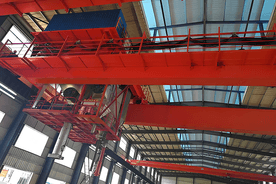
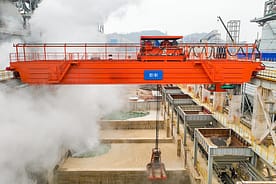
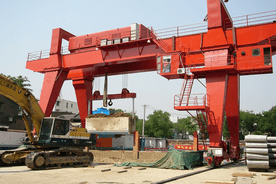
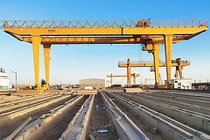
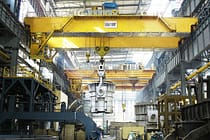
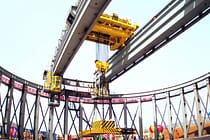
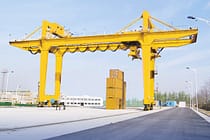
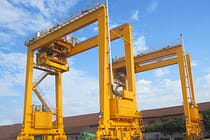
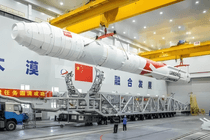
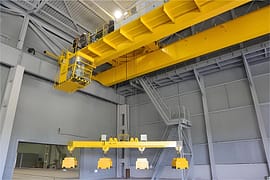
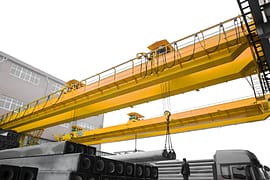
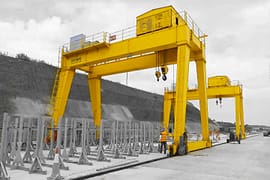
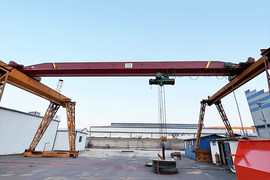
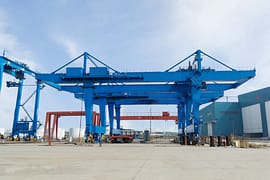
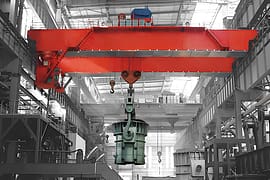
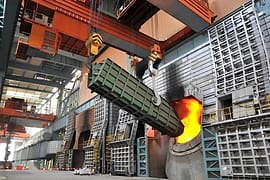
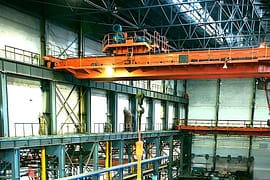
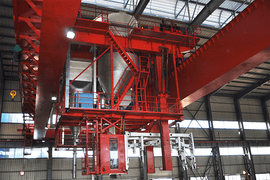
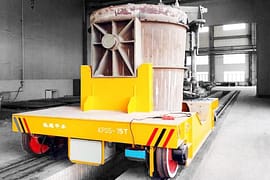
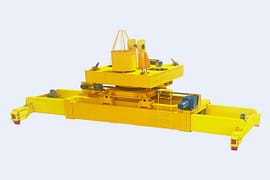
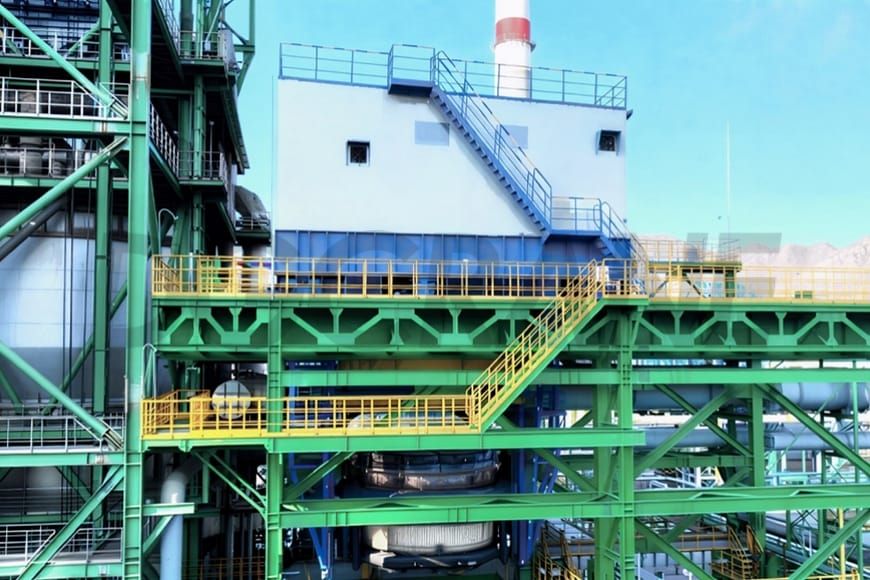
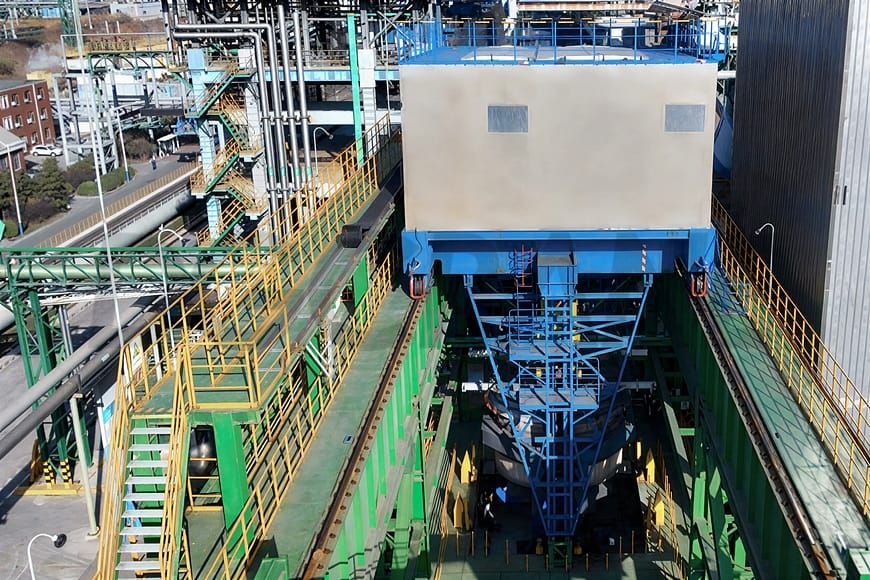
The automated coke pot crane is one of the red-coke transport equipment in dry quenching projects. Its main purpose is to lift coke cans filled with red coke to the top of the derrick, travel along the track above the dry quenching tower, transport them to the designated loading device above the dry quenching tower, and slowly lower them to their seat. The gate at the bottom of the coke can automatically open, loading the red coke into the dry quenching tower. The entire vehicle adopts a variable frequency speed control system, featuring highly accurate automated positioning, high efficiency and energy saving, and high reliability.
- Capacity: 43t-132t
- Applicable coke pot: 4.3-7.63m (tamping, top loading)
- Applicable environment: outdoor, high-temperature smoke and dust
- Operating track height: 50m
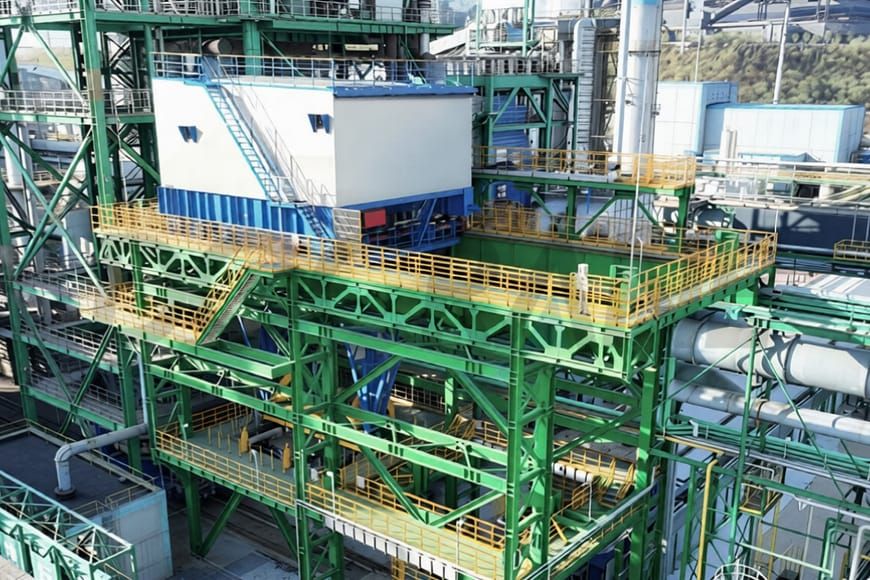


Features of the Automated Coke Pot Crane
- The entire vehicle adopts a variable frequency speed control system for highly precise positioning.
- Improves work efficiency and achieves fully automated operation without human intervention through remote video monitoring and human-machine interaction technology.
- Employs an integrated system of centralized electrical control and mechanically assisted anti-sway to ensure stable crane operation.
- Reduces hoisting motor power while meeting operational cycle requirements, saving energy and reducing consumption.
- Planetary hoisting + rigid guide frame technology ensures uninterrupted lifting and transport of hot coke cans even in fault conditions.
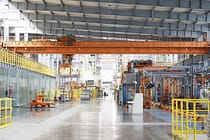
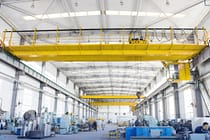
- Utilizes a new main structure frame design for clear force transmission, effectively reducing installation difficulty. It can be used on-site immediately after factory assembly, avoiding secondary on-site installation.
Components of the Automated Coke Pot Crane
Planetary Hoisting Mechanism
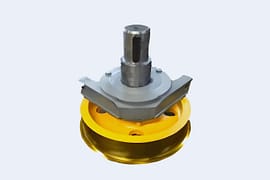
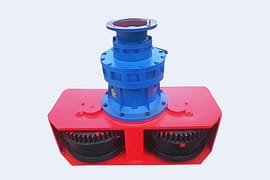
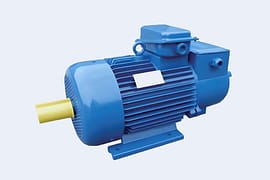
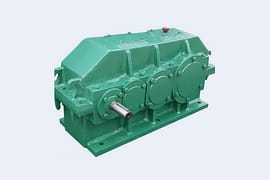
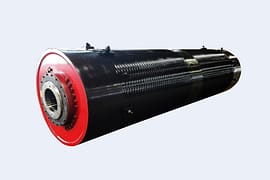
As a core component of the automated coke pot crane, its safety directly affects the safety of vertical lifting operations. Therefore, the planetary lifting mechanism consists of two identical motors and a parallel-shaft planetary reducer. A drum is mounted on each side of the reducer’s low-speed shaft, and each drum is equipped with a safety brake and two sets of fixed pulley systems.
During normal operation, both motors work simultaneously at their rated lifting speed. If one motor fails, the other can continue operating at half its rated lifting speed. Based on the planetary differential principle, when the two motors’ speeds and starting/braking are asynchronous, no additional loads or impact loads are generated, ensuring balanced force on both motors. This type of lifting mechanism allows for continuous production with high efficiency, but it is relatively expensive and is generally recommended for large-tonnage applications.
Travelling Mechanism
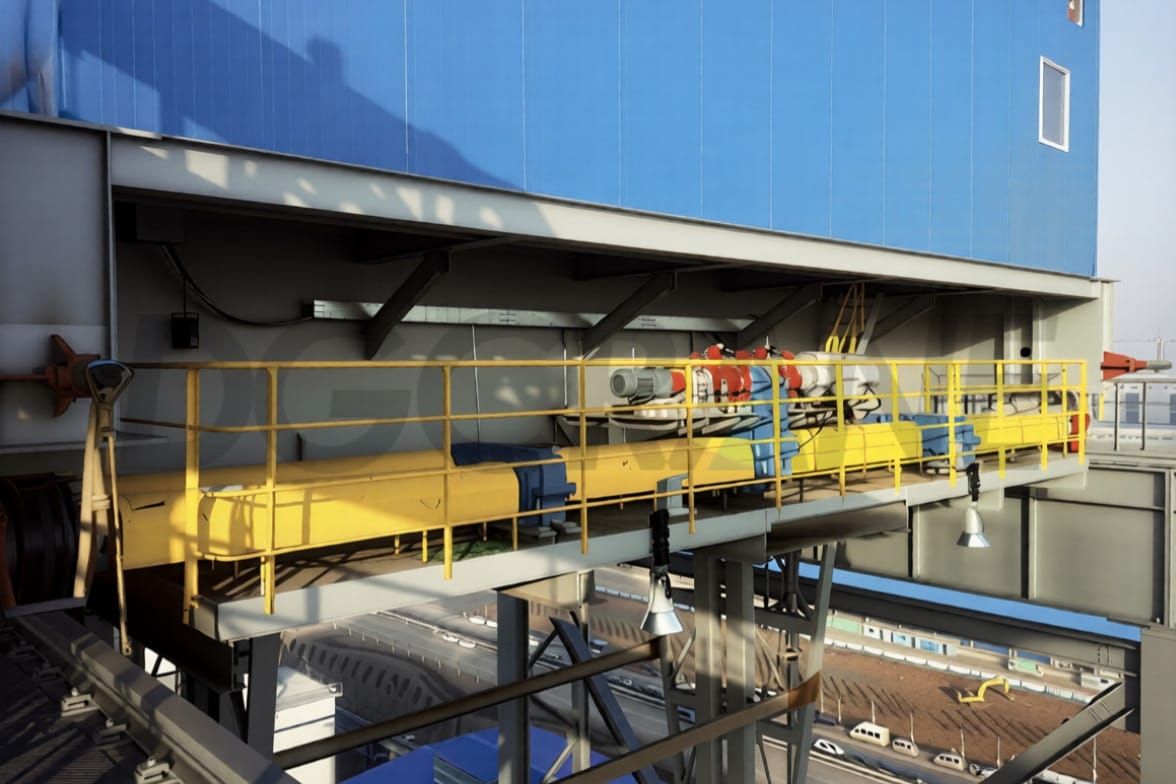
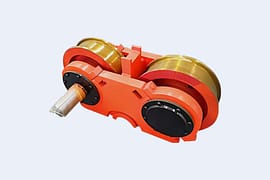
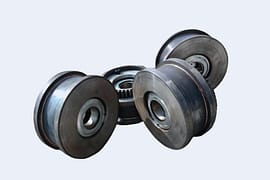
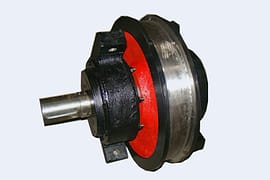
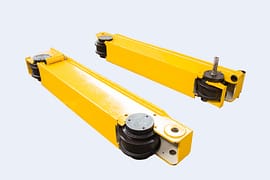
As another core component of intelligent coke pot cranes, its safety directly affects the safety of the crane’s horizontal operation. There are two common drive forms for the running mechanism: centralized drive and four-corner separate drive.
Centralized drive has two forms: large and small motors, and two motors in the same configuration. The former means that even under abnormal working conditions, a manual clutch can be used to switch to the small motor’s independent working mode to complete one work cycle; the latter means that when one motor fails, the other motor can continue to work at half its rated operating speed.
The four-corner separate drive means that when one corner fails, the other three corners can still complete a working cycle.
Four-link Plate Hook Lifting Device
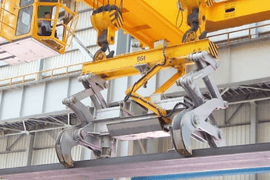
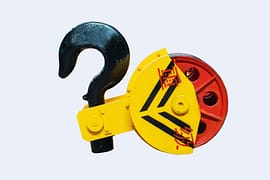
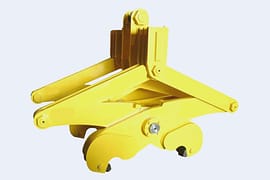
The coke pot lifting device is a core and crucial component of the crane. It operates directly in a high-temperature, dusty, high-altitude environment, therefore requiring automatic operation and high safety and reliability. It consists of two sets of four-link plate hook lifting devices, two sets of lower pulley assemblies, an upper crossbeam, and a lower crossbeam.
The change in distance between the upper and lower hinge points of each four-bar linkage plate hook lifting device causes the plate hook rod and anti-detachment rod to rotate around the lower hinge point, thus opening and closing the plate hook.
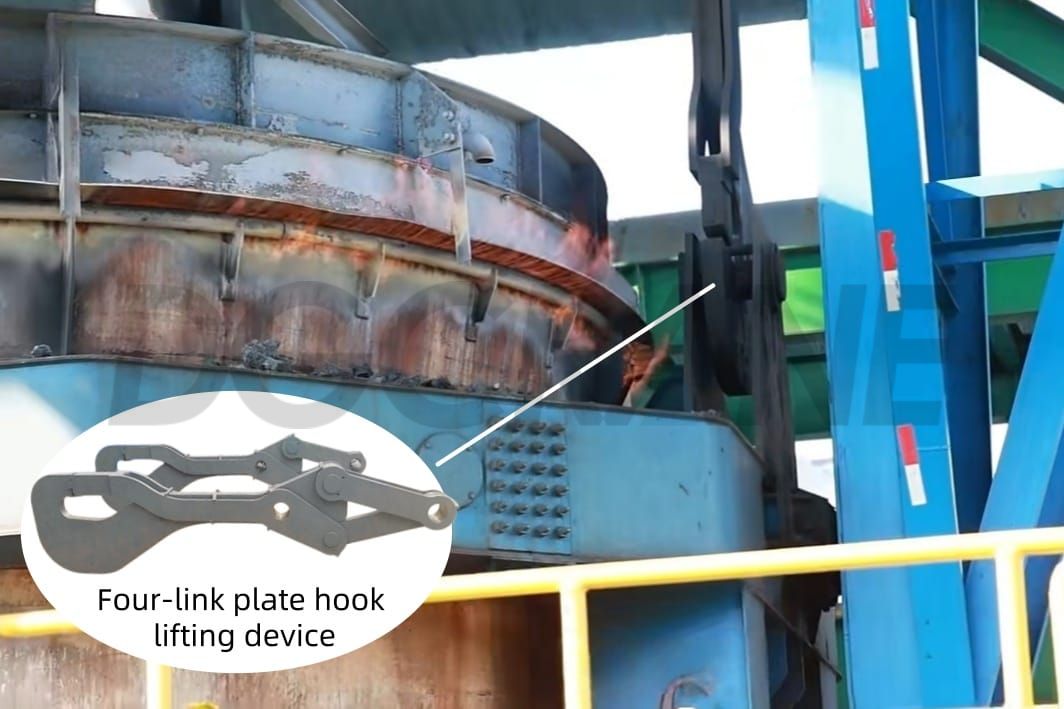
During operation, the lifting device descends vertically under the action of the hoisting mechanism. When the four support arms extending from the left and right sides of the lower crossbeam fall and rest on the four stops, the lower hinge point of the four-bar linkage plate hook is prevented from descending further and remains stationary along with the lower crossbeam.
At this time, the upper crossbeam continues to descend under its own weight, causing the upper hinge point of the four-bar linkage plate hook lifting device to continue descending. Under the control of the hoisting mechanism and wire rope, after descending a set distance, the distance between the upper and lower hinge points of the four-bar linkage plate hook shortens, causing the plate hook rod and anti-detachment rod to separate from the closed state and change to the open state. Reversing the operation allows for the separation and retraction of the plate hook, thus completing the automatic hanging and unshaking of the coke can.
This lifting device requires no power drive or manual operation; it automatically completes the opening and closing of the plate hook lifting device using its own weight.